显示标签为“LED market”的博文。显示所有博文

2013年12月15日星期日

Global LED lighting market worth $42 billion by 2019

LED Lighting: Market Shares, Strategies, and Forecasts, Worldwide, 2013 to 2019: Next generation lighting achieves a complete replacement of incandescent filament bulbs with LED lighting that is more energy efficient, lasts longer and has a significantly lower cost of operation. LED lighting...


The LED bulbs are implementing new semiconductor technology


LED Lighting: Market Shares, Strategies, and Forecasts, Worldwide, 2013 to 2019: Next generation lighting achieves a complete replacement of incandescent filament bulbs with LED lighting that is more energy efficient, lasts longer and has a significantly lower cost of operation. LED lighting decreases labor costs of replacing bulbs in commercial situations. The LED bulbs are implementing new semiconductor technology.


Worldwide LED lighting markets are poised to achieve significant growth as buildings and communities lead the way in implementing the more cost efficient systems. In some cases, the utility plants are providing funding and financing so that lighting users can make the shift to LED lighting.


LED lamps lower the overall cost of lighting. LED lighting costs are less than costs with incandescent lights. LED lamps offer up to 50,000 hours of illumination with a fraction of the energy used by traditional incandescent bulbs. LED bulbs generate 90% less heat than incandescent bulbs. LED bulbs extend time between bulb replacements. The bulbs are used to achieve a near zero-maintenance lighting system.


Global LED lighting market worth $42 billion by 2019

2013年12月7日星期六

IHS: GaN-on-silicon LEDs forecast to increase market share to 40% by 2020

The penetration of gallium nitride-on-silicon (GaN-on-Si) wafers into the LED market is forecast to increase at a CAGR of 69% from 2013 to 2020, by which time they will account for 40% of all GaN LEDs manufactured, according to IHS.


IHS-Gan-on-Silicon-LED-forecast-to-increase-market-share-to-40-by-2020 IHS-Gan-on-Silicon-LED-forecast-to-increase-market-share-to-40-by-2020


The penetration of gallium nitride-on-silicon (GaN-on-Si) wafers into the LED market is forecast to increase at a CAGR of 69% from 2013 to 2020, by which time they will account for 40% of all GaN LEDs manufactured, according to IHS.


In 2013, 95% of GaN LEDs will be manufactured on sapphire wafers, while only 1% will be manufactured on silicon wafers. The growth in the manufacturing of GaN-on-Si LEDs between 2013 and 2020 will take market share from both sapphire and silicon carbide wafers, IHS believes.


“Manufacturing large ingots made from sapphire is difficult, whereas silicon wafers are available from 8-inch up to 12-inch and are generally cheaper and more abundant,” said Dkins Cho, senior analyst for lighting and LEDs at IHS. “There is a large pre-existing industry for silicon-based manufacturing that is leveraged to create economies of scale and reduce the cost of an LED.”


Repurposing manufacturing facilities to accommodate the shift toward GaN-on-Si LEDs is generally accepted to require minimal investment. Companies that previously manufactured CMOS semiconductors already own legacy 8-inch CMOS fabrication units that can be converted for LED production with a small modification. These companies already have in-house expertise and technology associated with silicon-based processes, IHS noted.


“Many of the CMOS semiconductor manufacturers already have excellent inspection tools, unlike traditional LED companies,” Cho continued. “This could help increase their process yield through in-situ monitoring. However, it is unlikely the repurposing will happen overnight; instead we forecast a shift during the coming years.”


Source: IHS, compiled by Digitimes, December 2013


IHS: GaN-on-silicon LEDs forecast to increase market share to 40% by 2020

2013年11月29日星期五

Mid Power LED EMC/PCT/Flip-Chip Fight for Market Share

LED package manufacturers are expanding EMC production capacity. After improvements to PCT lead frame materials, LED package manufacturers plan to introduce PCT products into the mid power market. Flip-chip products are also making their way in the 2014 mid power market.


super-white-polycyclohexylene-dimethylene-terephthalates-PCT-compounds super-white-polycyclohexylene-dimethylene-terephthalates-PCT-compounds


With the LED lighting market booming and LEDs in backlight spec changes, the mid power spec market had taken center stage within the LED industry this year, already surpassing the high power market in initial output value. LED drivers with EMC lead frames can reach 1-2W power output which can supply the mid power and mid/high power LED market. LED package manufacturers are expanding EMC production capacity. After improvements to PCT lead frame materials, LED package manufacturers plan to introduce PCT products into the mid power market. Flip-chip products are also making their way in the 2014 mid power market.


EMC products have become a rising star this year amid the emerging mid power market. Nichia has released the popular EMC 757 series on the market this year. With EMC products able to be employed in direct-lit backlighting and the lighting market, as well as rapid price declines, LED package manufacturers have begun expanding EMC product development and production capacity.


Nichia has come out on top among LED package manufacture for EMC production capacity, with single month production reaching 800KK. Following close behind is Chinese LED package manufacturer Lighting Optoelectronics with 2700KK. Among Taiwanese LED package manufacturers, AOT single month peak production reached 1200KK. The recent acquisition of China Electric, GIO Optoelectronics has a single month production capacity of 80KK and Everlight reached 60KK. Each manufacturer plans to continue with EMC production capacity expansion in 2014.


PCT lead frame driver power has increased from 0.7W-1.2W through improvements by Taiwanese and Korean manufacturers. This has not only distanced PCT and PPA lead frames but also pushed PCT into the once EMC dominated 0.7W01.2W market. High cost/performance ratio (C/P) PCT products have also become an important mid power product line for some LED package manufactures in 2014.


Initial output value for the mid power market has already surpassed high power in 2013. Philips Lumileds originally focused on the high power market, but in 2013 turned their attention towards mid power. Philips Lumileds has already launched several mid power products and plans to also use a smaller flip chip with better lumens per area, wider beam angle, and five-sided emitter in the mid power market in 2014, showing how much importance the company places on the mid power market.


Mid Power LED EMC/PCT/Flip-Chip Fight for Market Share

2013年11月26日星期二

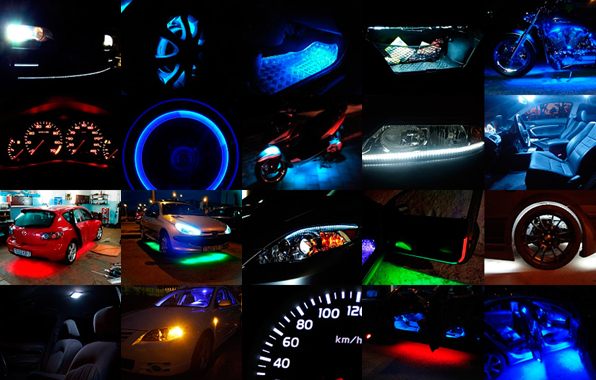
Expansion of LEDs into the Automotive Lighting Market

Following LED automotive lighting already having become a new standard in automotive accessories, high luminosity LEDs have expanded their application in the automotive lighting market. With the constant increase in capabilities of LED lighting, LED headlight demands are also continuing to rise....


LED-car-lighting LED-car-lighting


Following LED automotive lighting already having become a new standard in automotive accessories, high luminosity LEDs have expanded their application in the automotive lighting market. With the constant increase in capabilities of LED lighting, LED headlight demands are also continuing to rise. New facets are opening up propelling the market forward.


With general LED lighting prices rapidly decreasing, automotive lighting prices and gross profit comparatively remain stable making it a prime market in which LED lighting manufacturers are all rushing to stake their claim in.


The new regulation by the EU that all future vehicles be equipped with Daytime Running Lights (DRL) is predicted to cause explosive growth in the LED automotive lighting market.


While the automotive components supply chain is relatively closed, firms that have been able to break their way into this niche market include big names like OSRAM, Philips Lumileds, and Nichia. LED automotive light manufacturers include Valeo, Automotive Lighting, Hella, Koito, Stanley, and Ichikoh who have a market share of 85 percent.


Aside from a relatively closed supply chain, another obstacle LED manufacturers face is that lighting verification time is longer, usually taking upwards of 1.5 to 2 years. Manufacturers thus need to input man power and R&D resources for an extended period of time. Nonetheless, once the supply chain is infiltrated, product price, gross profit performance, and orders are all stable.


According to market research organization LEDinside, car headlights and DRL are in a LED introduction phase, where single unit prices remain high. This causes prices to drop more rapidly. 2013 experienced a price reduction of 16 percent and 13 percent respectively. Other automotive lights such as taillights and dashboard lights had a steadier decline in price for 2013 with prices dropping 5 percent and 1 percent respectively.


Following recent strict carbon emission regulations issued by the EU, LED automotive light standards have also become stricter but still continue to grow. In 2013 the EU issued new regulations that by 2020 carbon dioxide emission by all new vehicles for every kilometer must decrease from the current 130 grams down to 95 grams.


It is predicted that use of LED lighting by international automotive manufacturers will increase. LED manufacturers still need time in order to cultivate and earn trust and long-term orders from global big named automotive manufacturers.


Buy Car LED Lights at TopLEDlight.com:


Expansion of LEDs into the Automotive Lighting Market

2013年11月24日星期日

LED Bulb Retail Price Steadily Decline in October, Shipment Volume Anticipated to Exponentially Increase in 2014

According to market intelligence organization Trendforce’s LEDinside division’s newest LED bulb retail findings for October 2013, global 40W equiv LED bulb ASP dipped 2.3 percent to US $15.8 (NT $466), with price decline most evident in the UK region. Conversely, global 60W equiv LED...


According to market intelligence organization Trendforce’s LEDinside division’s newest LED bulb retail findings for October 2013, global 40W equiv LED bulb ASP dipped 2.3 percent to US $15.8 (NT $466), with price decline most evident in the UK region. Conversely, global 60W equiv LED bulb ASP rose slightly 1.2 percent to US $21.6.


ASP for 40W equiv and 60W equiv LED bulbs has already dropped down to US $10 in most regions, according to observations by LEDinside. Comparable prices with traditional energy saving bulbs have stimulated market demand. LEDinside forecasts 2014 LED lighting product shipment volume to reach 1.32 billion units, a growth of 68 percent from 2013. Shipment volume for replacement light source products such as LED bulbs is especially anticipated to increase, with companies such as IKEA already distributing LED bulbs in mass. Attitude towards LED lighting by traditional luminaire manufacturers such as Philips has become more aggressive. Spurred by various large lighting brand manufacturers and terminal channels, 2014 LED bulb shipment volume is anticipated to grow exponentially.


40W equiv. LED bulb price decline most evident in UK


Global 40W equiv. LED bulb ASP dipped 2.3 percent to US $15.8, with price decline most evident in the UK region. The lowest prices for 40W equiv. LED bulbs had already dropped below US $10 in all the surveyed regions during October.


UK price declined 11 percent and pre-existing product prices steadily decreased, with largest decline seen in Samsung and Osram. Price for 40W equiv LED bulb in UK dropped as low as US $8.1. U.S. ASP for October slid 5.7 percent. Pre-existing product prices steadily decreased and lowered prices for new items introduced this month. U.S. region 40W equiv LED bulb price dropped as low as US $9.


Global 60W equiv. LED bulb price fluctuates


Global 60W equiv. LED bulb ASP rose slightly 1.2 percent to US $21.6. With certain areas affected by exchange rate and ending of promotion for low-priced LED bulbs, 60W equiv LED bulb ASP increased slightly.


Price difference narrowed as the lowest prices of 40W equiv LED bulbs alldropped below US $10 in the surveyed regions


Price decrease in October for 40W equiv LED bulbs was more evident with brands from each region dropping prices below US $10, and narrowing different region products’ price gap, observed LEDinside. Price decrease was especially evident in UK where prices for certain pre-existing high priced items dipped and prices for already low priced items continued to drop. Osram, Samsung, and LG all have products that are priced close to US $10 in the UK region. In the U.S. region, aside from low priced bulbs launched by Cree and Walmart recently, Philips and Ecosmart have also released products priced below US $10 for a long time.


LED Bulb Retail Price Steadily Decline in October, Shipment Volume Anticipated to Exponentially Increase in 2014

2013年11月18日星期一

Top-10 vendors to occupy 69% of 2013 global LED lighting sales, says PIDA

The 10 largest vendors will together account for 69% of global LED lighting product sales in 2013. The 10 largest vendors and respective global shares are Philips 20%, Osram 15%, Panasonic 8%, Toshiba 7%, Cree 4%, Endo 4%, Zumtobel 3%, Koizumi 3%, Iris Ohyama 3% and Sharp 2%, PIDA indicated.


The 10 largest vendors will together account for 69% of global LED lighting product sales in 2013, according to Taiwan’s Photonics Industry & Technology Development Association (PIDA).


PIDA logo PIDA logo[/caption]


The 10 largest vendors and respective global shares are Philips 20%, Osram 15%, Panasonic 8%, Toshiba 7%, Cree 4%, Endo 4%, Zumtobel 3%, Koizumi 3%, Iris Ohyama 3% and Sharp 2%, PIDA indicated.


According to LEDinside, global LED lighting production value in 2014 will reach US$17.8 billion and corresponding shipments will increase 68% on year to 1.32 billion units. On-year growth in LED lighting sales volume in 2014 will be 72% in the North America market, 64% in Latin America, 69% in Europe and 86% in China, LEDinside said.


Top-10 vendors to occupy 69% of 2013 global LED lighting sales, says PIDA

2013年11月14日星期四

LED bulb average prices in Japan fall in October

Average retail prices for LED light bulbs equivalent to 40W and 60W incandescent ones in the Japan market stood at JPY1,717 (US$17.2) and JPY2,468 respectively in October, slipping on month by 3.2% and 3.7% respectively, according to Digitimes Research.


Average retail prices for LED light bulbs equivalent to 40W and 60W incandescent ones in the Japan market stood at JPY1,717 (US$17.2) and JPY2,468 respectively in October, slipping on month by 3.2% and 3.7% respectively, according to Digitimes Research.
millions-of-led-lights-transform-japanese-botanical-garden-into-a-winter-wonderland millions-of-led-lights-transform-japanese-botanical-garden-into-a-winter-wonderland[/caption]

October average retail prices for 40W- and 60W-equivalent LED light bulbs in other markets are as follows: US$21.40 (up 1.9% on month) and US$24 (down 10.1%) in the US; EUR14 (US$18.70, down 3.4%) and EUR17.60 (down 0.6%) in Europe; KRW15,157 (US$14.1, up 3.1%) and KRW15,685 (up 5%) in Korea, Digitimes Research indicated.


In the China market, October average retail price for 7W LED light bulbs stood at CNY43.8 (US$7.2, up 1.9%) and CNY55.4 (down 0.4%) for 9W ones.


LG 40W-equivalent LED light bulbs and Samsung 60W-equivalent models for sale in the US market had the highest average lumen-price ratio of 77.6lm/US$ and 72.7lm/US$ respectively in October. In terms of luminous efficiency, Sharp 40W-equivalent LED light bulbs and Toshiba 60W-equivalent models available in the Japan market had the highest average level of 75


LED bulb average prices in Japan fall in October

2013年10月21日星期一

Global LED lighting market could grow by half in 2014

The global market for light emitting diode (LED)-based lighting solutions could see its value soar by nearly one-half over the course of next year, as the technology continues to improve and consumer awareness grows, a market advisory firm has projected. Market value for LED lighting will soar...


global-led-lighting-market-could-grow-by-half-in-2014

global-led-lighting-market-could-grow-by-half-in-2014


The global market for light emitting diode (LED)-based lighting solutions could see its value soar by nearly one-half over the course of next year, as the technology continues to improve and consumer awareness grows, a market advisory firm has projected. Market value for LED lighting will soar to US$35.3 billion in 2014, a 47.8 percent year-on-year increase.

The research firm attributed the “fast growing market” to a change in purchasing habits, as LED lighting is beginning to overtake conventional lighting in the mindset of many consumers.


Global LED lighting penetration is also expected to increase to 32.7 percent from this year’s 26 percent, the research firm predicted, while penetration of LED bulbs and tubes will reach 20 percent and 15 percent of their respective markets.


The increase in demand suggests competitive LED chip manufacturers will continue to expand production capacity in 2014, said Jack Kuo, a senior analyst with LEDinside.


Aside from raising yield rates and machine operation time, Kuo said LED chip manufacturers will be acquiring more metalorganic chemical vapor deposition (MOCVD) equipment — a major part of optoelectronics manufacturing — to expand production capacity.


MOCVD is a chemical process for the production of thin films used in semiconductors and optical equipment, which promises higher reliability and fewer imperfections in the manufacturing process.


a-made-in-China-MOCVD-machine

a-made-in-China-MOCVD-machine


Global LED lighting market could grow by half in 2014

2013年10月9日星期三

Made in China LED Bulbs help Wal-Mart beat Cree on price

Wal-Mart (WMT) recently announced that they are selling a new line of LED bulbs(Made in China) at the most competitive price on the market, $8.88 for a 60 watt equivalent (uses 11 watts) and $8.48 for a 40 watt equivalent (uses 6 watts). What is most stunning to me was that the 40 watt equivalent bulbs sold at Wal-Mart used the same amount of energy as Cree’s 40 watt equivalent, 6 watts. The bulb even gave off a little more lumens of light than Cree’s which tells me that this technology has become commoditized and that Cree’s technology is nothing special relative to what else is out there on the market. The quality of the light however was nearly the same.Cree’s LED bulb sales growth may need to be taken down a notch to reflect the greater competition that’s hitting the market.


Cree-40W equivalent-LED-bulb

Cree-40W equivalent-LED-bulb


Wal-Mart (WMT) recently announced that they are selling a new line of LED bulbs at the most competitive price on the market, $8.88 for a 60 watt equivalent (uses 11 watts) and $8.48 for a 40 watt equivalent (uses 6 watts). I went to my local Wal-Mart and bought one of each to see how these bulbs compared to the Cree (CREE) LED bulbs I’ve been buying at Home Depot (HD) where the Cree bulbs are exclusively sold.


The box the Wal-Mart bulbs came in didn’t say who the maker of the bulb is, just that it was made in China. It did say it has a 3 year warranty Vs. Cree’s bulbs that are assembled in the U.S.A. and come with a 10 year warranty.


Both bulbs claim to last 25,000 hours or 22.8 years based on 3 hours of use per day. Other key differences noted below:


Company40 Watt Equivalent PriceWatts UsedLumens
Cree$9.976450
Wal-Mart$8.486470


Company60 Watt Equivalent PriceWatts UsedLumens
Cree$12.979.5800
Wal-Mart$8.8811800

After buying the bulbs from Wal-Mart, I could see and feel the product to get a sense of the quality. The bulbs had a plastic head Vs. Cree’s bulb heads which are made of glass and coated with a clear polymer of some sort for safety. There was a clear difference in the feel of the bulbs giving Cree’s bulbs a feel of greater durability and quality.


The quality of the light however was nearly the same in my judgment on both the 40 watt and 60 watt equivalent.


What is most stunning to me was that the 40 watt equivalent bulbs sold at Wal-Mart used the same amount of energy as Cree’s 40 watt equivalent, 6 watts. The bulb even gave off a little more lumens of light than Cree’s which tells me that this technology has become commoditized and that Cree’s technology is nothing special relative to what else is out there on the market.


It was back in March when Cree introduced their 40 watt and 60 watt equivalent bulbs and the CEO, Chuck Swoboda put it like this:


“The Cree LED light bulb was designed to offer consumers a no-compromise lighting experience at a compelling price. Over the last couple of years we recognized that the consumer is instrumental in the adoption of LED lighting, but we needed to give them a reason to switch. We believe this breakthrough LED bulb will, for the first time, give consumers a reason to upgrade the billions of energy-wasting light bulbs. We could not think of a better way to get this bulb into consumers’ hands than through The Home Depot, a visionary partner who embraces innovation.”


Cree’s introduction gave me personally a reason to start to switch to Cree’s LED bulbs and keep a close eye on the stock. Since March, the share price traded up from the mid 40′s to the low to mid 70′s in August, up from the mid 20′s 1 year ago.


walmart-logo

walmart-logo


Cree-LED-logo

Cree-LED-logo


What Cree should be concerned about now is to see if Wal-Mart will be the one who’ll give consumers the reason to switch thus taking away a big chunk of the LED bulb sales pie in the months and years ahead.

My judgment says they will since they can beat them on price, meet Cree on energy efficiency like their 40 watt equivalent that uses 6 watts and simply get distribution through their massive customer base.


To put this competition in perspective, Cree doesn’t just sell LED light bulbs for homes and businesses. In the 4th quarter ended June 30th, aggregate sales at Cree were $375 million of which $133.64 million fell under the category “lighting products.” Lighting products is where the LED bulb sales fall under. Sales of the bulbs themselves are not broken out. So roughly 35% of Cree’s aggregate sales fall under the category where these LED bulb sales fall under.


The bottom line is that robust sales growth from Cree’s LED bulbs may not be as robust as analysts and investors once might have thought with Wal-Mart’s bulbs now on the market.


Regardless, there is a huge market I believe for LED bulbs once society sees the light in the economics of the bulbs themselves. The winner in these bulb wars ultimately is the consumer and society itself with the money we’ll all be saving on electricity and light bulbs for the rest of our lives.


I remain on the sidelines with Cree and await a better entry point to be a buyer of Cree shares. My bias is that Cree’s LED bulb sales growth may need to be taken down a notch to reflect the greater competition that’s hitting the market.


Made in China LED Bulbs help Wal-Mart beat Cree on price