2014年2月11日星期二

When (and Where) Solar LED Lighting Makes Sense

Right now, very few businesses or real estate development companies would think first about using solar panels to run their outdoor lights, but in places where’s no established cabling, solar lights really can make sense from an economic and efficiency standpoint. And I’m not just talking about in emerging nations.


Right now, very few businesses or real estate development companies would think first about using solar panels to run their outdoor lights, but in places where’s no established cabling, solar lights really can make sense from an economic and efficiency standpoint. And I’m not just talking about in emerging nations.


In the past six months, I’ve spoken with two companies that are pioneering the commercial market for these applications (the residential market is a separate animal): Sol Lighting, a Palm City, Fla.-based company that specializes in outdoor LED lighting technology; and Clear Blue Technologies, a Toronto-based maker of lighting controls and other smart grid components that is testing the viability of off-grid solar and wind-powered lights.


The size of the overall commercial outdoor lighting market is estimated at $11 billion. Within that, there’s a pronounced shift to LED technologies. In 2012, for example, 54 percent of the 2 million luminaires installed along roadways and tunnels around the world were LED format, reports Strategies Unlimited in its January 2014 report on outdoor area and street lighting. Another forecast from Navigant Research predicts shipments of smart, LED-based street lights will top 17 million by 2020.


No one appears to have cooked up a reliable separate market forecast for the niche solar sector, but Sol in particular, has made its presence felt globally over its roughly 20 years of existence. As of November 2013, it had installed more than 60,000 systems in 60 different countries, representing more than 10 megawatts of solar capacity. (That’s about 840,000 square feet of solar panels and enough lights to illuminate a nine square-mile parking lot.)


“The $11 billion-plus commercial outdoor lighting market is experiencing a solar and LED renaissance,” said Dibs Tailor, president and CEO of Sol Lighting, in a statement. “This 10 megawatt milestone confirms our leadership in this space and is a testament to our superior design, manufacturing and technology capabilities. By carefully integrating cutting-edge photovoltaic, LED and battery storage technologies into high-quality outdoor lighting products, we have made solar lighting very cost-effective and even more reliable.”


When I spoke with Tailor, he said roadway lighting such as the company’s 20/20, 10/10 and Greenway systems account for the vast majority of sales, although Sol sells integrated systems for bus stops, transit shelters, signs and emergency response.


In the United States, Sol is winning deals related to new construction projects, where there is little or no existing lighting infrastructure. Two examples include the Los Angeles County Arboretum, which couldn’t install grid-tied lights because of concerns over root systems across its 127-acre grounds; and the Top Gun Flight School in Fallon, Nev., which put them near aircraft fueling stations and power sub-stations. In both cases, the installations were meant to improve security. A third installation, this one for 146 systems, helped a swap meet business in Las Vegas add night-time events quickly while avoiding major new construction.


Sol’s technology was also used by Premier Homes in Richmond, Va., to add 21 lighting poles throughout a 40-home residential development.


Solar-LED-street-lights Added as an afterthought, these solar lights in Richmond cut installation costs in half for the developer.


The lights were actually an afterthought, one that didn’t emerge until after all the wiring and cabling for other utilities had already been buried, said Sean Bowers, chief operating officer for Premiere. “People were leaving lights on to brighten up the alleys,” he said.


Together with the city, the developer determined that solar lighting was a far more cost-effective way to put in lights than the traditional alternative: a savings of nearly $600,000 for the installation, not to mention the ongoing electricity cots, Bowers said. “It wasn’t very hard to learn how to work with these things,” he added.


So far, the installation has survived two hurricanes with no issue, and Premiere plans to use the same lights in another Richmond housing development, Bowers said.


It’s not realistic to expect solar lighting to become the norm for retrofits for years – if you take out the installation concerns, it’s tough to make the cost argument. But increasingly, the technology will find traction in locations where safety and grid infrastructure are of equal concern.


Aside from Sol and Clear Blue, some of the other companies with a particular focus on developing this emerging market include Solar Street Lights USA, OkSolar.com, Solar Lighting International, Solar Electric Power Co., and Silicon Solar.


When (and Where) Solar LED Lighting Makes Sense

2014年2月10日星期一

Cree gets smart with SmartCast LED lighting controller

Over the past two years we’ve seen Cree transition from an LED manufacturer with a presence in related industries to a major force in the LED lighting market. Now that the company has a firm footing in the consumer LED space, it has set its sights back on business with the SmartCast lighting control system.


Over the past two years we’ve seen Cree transition from an LED manufacturer with a presence in related industries to a major force in the LED lighting market. Now that the company has a firm footing in the consumer LED space, it has set its sights back on business with the SmartCast lighting control system.


cree-smartcast-led-lighting-controller cree-smartcast-led-lighting-controller


With all the talk about LiFX and Hue, it’s easy to forget that lighting control systems were originally designed for — and are still best utilized in — very big spaces. Offices, parking garages, data centers, and factories can all benefit greatly from smart lighting controls and as businesses start to make this move en masse, Cree wants to be right there with them. SmartCast is a lighting control system that networks together up to 250 light fixtures, intelligently groups them, and gives them access to a wireless control system. It’s smart, cheap to install, efficient, and — unlike the competition — should be dead simple to operate.


Cree SmartCast lighting control system


What SmartCast offers businesses right now is a 70% drop in energy usage associated with their lighting compared to current fluorescent systems. As lighting is a major source of power usage for most businesses, we’re talking about serious money here. The majority of that efficiency boost will come simply from moving to LED lighting, but that’s just the first step. After that, SmartCast will use motion sensing, dimming, and daylight harvesting (dimming the lights when it’s sunny outside) to account for the other 30%.


cree-smartcast-led-lighting-controller-2 cree-smartcast-led-lighting-controller-2


SmartCast controllerRight now businesses know they can cut down on power usage by utilizing intelligent controls for their lighting, but most have avoided doing so because they fear the expense and complication involved. Cree recognized this and took the problem head on. The initial expense will still be considerable — there is no getting around that — but Cree was able to get SmartCast’s overall pricing down to about 40 cents per square foot. That might sound like a lot, but competitive systems sell for about double that (at least according to Cree).


The more interesting advance, at least to us non-lighting designers, is SmartCast’s simplicity. Up to 250 lights can be placed in a group, all of which are set up with a single remote control. Lights in a group can communicate with one another and, using a unique pattern of flickers, self-organize so they each know where they are relative to the rest. Then, using built-in sensors, lights can dim according to daylight conditions in their area, resulting in serious power savings. Individual zones, like a conference room, can be dimmer with a wal


Cree gets smart with SmartCast LED lighting controller

LED Corks Turn Empty Bottles Into Beautiful Lamps

A winter of heavy drinking has probably left you with a mountain of empty wine bottles that can now easily be repurposed as stylish lamps with these LED Corks.


For many of us it will still be a few months before dinner parties on the back patio are feasible again—but there’s no reason you can’t start preparing now. A winter of heavy drinking has probably left you with a mountain of empty wine bottles that can now easily be repurposed as stylish lamps with these LED Corks.


Popping off the faux cork top reveals a standard USB connector for charging off AC adapters or your computer, and with a simple twist the bright white LED can be turned on or off. An hour’s charge gets you about two and a half hours of light, which is just enough time to serve dinner, enjoy some conversation, and then subtly hint that it’s time for your guests to head home.


LED-cork-USB-rechargable LED-cork-USB-rechargable


rechargeable-LED-corks-turn-empty-bottles-into-beautiful-lamps rechargeable-LED-corks-turn-empty-bottles-into-beautiful-lamps


LED-corks-turn-empty-bottles-into-beautiful-lamps LED-corks-turn-empty-bottles-into-beautiful-lamps


LED-cork LED-cork


LED Corks Turn Empty Bottles Into Beautiful Lamps

2014年2月8日星期六

Detroit prepares for complete shift to LED street lighting

The Detroit Lighting Authority is holding community meetings throughout the month in areas particularly affected by broken or out street lights. The Public Lighting Authority is looking for LED (light-emitting diode) suppliers for its upcoming $160 million project to outfit the city’s entire streetlight system with the brighter, more efficient lights.


DETROIT, MI — The Public Lighting Authority is looking for LED (light-emitting diode) suppliers for its upcoming $160 million project to outfit the city’s entire streetlight system with the brighter, more efficient lights.


Katie Bailey | MLive.com Broken street lamps on Grand River Avenue leave swaths of Detroit dark on Wednesday, Feb. 5, 2014. Katie Bailey | MLive.com Broken street lamps on Grand River Avenue leave swaths of Detroit dark on Wednesday, Feb. 5, 2014.


Detroit’s severely dysfunctional lighting system is being reconfigured, with work beginning in two pilot neighborhoods this month, followed by a complete overhaul to last through 2015 on residential blocks and through 2016 along major roads.


Mayor Mike Duggan this week said the city decided to turn to LED lighting to boost efficiency from the current high-pressure sodium lights without taking on the risk of solar lighting.


“Overwhelmingly, the cutting-edge cities are going from sodium to LED,” Duggan said. “We couldn’t find a significant city going to solar… We made the decision to follow what is, I believe, the most advanced national trend right now, which is LED. Ten years from now, might it become solar? Yes. But I really don’t want Detroit to be the first to try it out.”


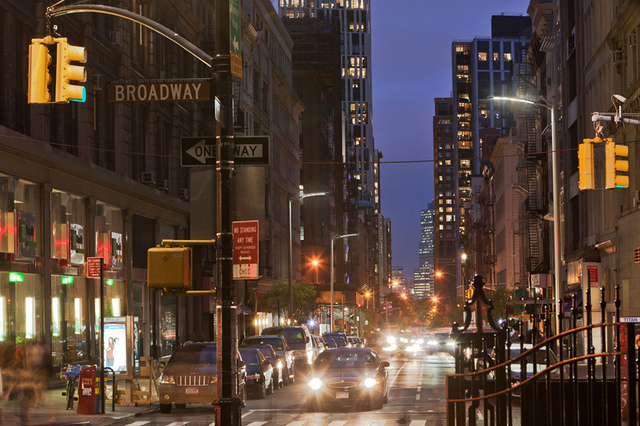
More and more cities public lighting are going to LEDs


LED-Street-Lighting-System LED-Street-Lighting-System


New-York-city-transition-street-lights-to-LEDs New-York-city-transition-street-lights-to-LEDs


London-makes-LED-street-light-plans London-makes-LED-street-light-plans


New LED lighting along Michigan Street in downtown Duluth, Minn. has brightened and whitened up the area considerably compared to the days of high-pressure sodium lighting. Credit: Bob King New LED lighting along Michigan Street in downtown Duluth, Minn. has brightened and whitened up the area considerably compared to the days of high-pressure sodium lighting. Credit: Bob King


philips-upgrade-buenos-aires-street-lights-with-led philips-upgrade-buenos-aires-street-lights-with-led


(Related: Detroit’s massive lighting problem convinced mayor’s wife to let him run)


Public Lighting Authority Executive Director Odis Jones said using LED lights will save the city $2.5 million a year.


The authority on Friday issued a request for proposals seeking manufacturers to supply the upgrade.


Jones said in a press release he is committed to utilizing Detroit and Michigan-based businesses where possible.


“The manufacturer will be expected to pursue local sourcing of work and utilize Detroit-based businesses in support of this effort wherever practical,” he said.


Potential bidders for the project can click here by Feb. 14, 2014 to request access to the bid documents.


Bidders can also access the RFP here, or by emailing support@poweradvocate.com, requesting access to Event # 40424.


Bids will be received until Feb. 21, 2014.


The overhaul will strategically place 42,200 neighborhood streetlights on blocks that have multiple occupied homes while forgoing lighting for abandoned areas.


“Blocks that have no houses, we’re not putting up lights, period,” Duggan said. “… But if we’ve got two or three families left, we’re still going to put a light on that block. We think they deserve that, too.”


Detroit prepares for complete shift to LED street lighting

Luminus SST-50 LED 1300lm 10w - $16.99

Luminus SST-50 LED
10w, 1300lm
VF: 3.4-3.7V
IF: 3A-5A
Diameter: 14mm/15mm/20mm
Color Temperature: 6500K(natural white)/3000K(warm white)
Special deal price $16.99
buy Luminus SST-50 LEDon KiwiLighting.com.


Luminus SST-50 LED

Power: 10w

Lumen: 1300lm

VF: 3.4-3.7V

IF: 3A-5A

Diameter: 14mm/15mm/20mm

Color Temperature: 6500K(natural white)/3000K(warm white)


buy at KiwiLighting.com


Luminus SST-50 LED


Luminus SST-50 LED 1300lm 10w - $16.99

2014年2月6日星期四

LEDs Change Thinking About the Light Bulb

Lights are no longer just for lighting. With the development of LED lamp technology, the lowly light bulb is doing more than turning on and off. A lamp can be the centerpiece of an environment meant to improve health, moods and even food.
LEDs can create light in multiple colors, generate less heat and use a fraction of the energy of older types of bulbs. And LEDs can be controlled remotely from a PC or smartphone app, as programmable as a television.


Lights are no longer just for lighting. With the development of LED lamp technology, the lowly light bulb is doing more than turning on and off. A lamp can be the centerpiece of an environment meant to improve health, moods and even food.


LEDs can create light in multiple colors, generate less heat and use a fraction of the energy of older types of bulbs. And LEDs can be controlled remotely from a PC or smartphone app, as programmable as a television.


“There’s a tremendous potential for LED lighting to go beyond illumination,” said John Strainic, General Electric’s general manager for consumer lighting. “We’re asking people to think about lighting as more than just an impulse purchase.”


Because of the LED manufacturing process, the light that the technology creates is weighted toward the blue end of the spectrum. That is true whether the LED is used in a light bulb, a tablet or a television display.


Philips sells a range of energy-enhancing lights, including the goLITE BLU, a panel of blue LEDs. Philips sells a range of energy-enhancing lights, including the goLITE BLU, a panel of blue LEDs.


That blue light has its advantages: Blue stimulates a photoreceptor in the eye that reduces melatonin production and helps a person stay awake.


“You have to start thinking of light as a drug,” said Terry K. McGowan, the director of engineering for the American Lighting Association, a trade group.


That is why Lighting Science, an LED manufacturer, is now selling Awake and Alert, an LED lamp that keeps people pumped up by pumping up the blue. Conversely, the company’s Good Night lighting product reduces the blue output, helping people sleep. This summer, Lighting Science will offer its Rhythm Downlight, a lamp controlled by a smartphone app that adjusts blue light based on a user’s sleep schedule.


“The Awake and Alert lamp does not look brighter, but our circadian system sees it as such,” said Robert Soler, Lighting Science’s director of lighting research. “We always felt that there was so much more you can do with light than just increase vision.”


awake-alert-LED-lamp The Awake and Alert, an LED lamp from Lighting Science, pumps out blue light, which stimulates a photoreceptor in the eye that reduces melatonin production and helps a person stay awake.


Philips sells its own range of energy-enhancing lights, including its Wake-up Light and — to combat winter blues — the goLITE BLU, a panel of blue LEDs.


In Europe, Philips is experimenting with its HealWell system in hospitals. By changing colors based on time of day, it encourages a patient to wake up, feel more relaxed and sleep more easily. At a field study at the Maastricht University Medical Center in the Netherlands, cardiology patients were found to sleep longer and experience reduced depression.


In the United States, Lighting Science is working on a similar system, and expects to offer products by the end of this year. “Unfortunately, many hospitals have removed solariums, but lots of studies have shown that they improve recovery time,” said Mr. Soler of Lighting Science.


While the ability to alter an LED lamp’s color opens up new uses for light, the fact that LEDs can be remotely controlled significantly changes their potential.


With Osram Sylvania’s ULTRA iQ system, users can program lamps to turn on when a key is put in the lock. Philips’s Hue system, on the other hand, allows users to create their own lighting moods and then send those instructions to special lamps via a smartphone app. The lights can also be programmed to respond to specific events, such as by glowing a prescribed color when it is time to remove the roast from the oven.


tabu-lumen-TL800-led-lap-bluetooth-smartphone Tabu’s Lumen TL800 lamp uses Bluetooth connectivity to control the lamp from a smartphone, allowing the user to change colors, dim the bulb and synchronize lighting effects to the rhythm of a song played on the phone.


Tabu’s Lumen TL800 lamp uses Bluetooth connectivity to control the lamp from a smartphone, allowing the user to change colors, dim the bulb and synchronize lighting effects to the rhythm of a song played on the phone.


But synchronizing lighting to events is much more than a parlor trick. Philips has designed lighting systems that decrease growing times and increase yield for greenhouse vegetables and flowers, by using a light’s specific hues.


In the Netherlands and Canada, among other places, tomato and vegetable growers are using Philips’s LEDs to improve bulk, increase fruit growth and reduce vegetable maturation time while reducing energy costs.


“We find the optimal light recipe for the grower,” said Udo van Slooten, a Philips Lighting general manager for horticulture.


Within the next few years, the world’s major lighting companies expect to expand LEDs’ connected capabilities, particularly with sensors.


For example, sensors could tell how many people are in a room and their location, and direct the proper amount of lighting to where it is needed. Medical patients prone to agitation could be calmed once facial recognition technology identifies them and changes the hue of an examining room to more calming tones. When older people enter a room, lighting intensity can be raised to compensate for their decreased ability to see.


“Today, lighting is becoming an appliance, like a blender,” said Mr. McGowan of the American Lighting Association. “I tell people when they move, they should take their LED bulbs with them.”


LEDs Change Thinking About the Light Bulb

2014年1月25日星期六

LED lighting makes services vehicle identification more difficult

In what might be referred as ‘the good old days’ (and by that I mean only a few years ago), it was fairly easy to identify which of the services a vehicle belonged to simply by looking at the colour of the beacons attached to it. Police, fire, and ambulances generally had blue lights; doctors had...


In what might be referred as ‘the good old days’ (and by that I mean only a few years ago), it was fairly easy to identify which of the services a vehicle belonged to simply by looking at the colour of the beacons attached to it. Police, fire, and ambulances generally had blue lights; doctors had green, the police seemed to get alternating red at some point. There could also be yellow, on working vehicles that could be a hazard, such as slow-moving refuse lorries, tow-trucks, and various road maintenance vehicles.


While many still sport the common incandescent light fittings, with coloured lenses which convert the white light from the conventional bulb behind, newer fitting are manufactured using LEDs, which do no usually have tinted lenses or covers.


Unlike the white light produced by a filament bulb, which requires a coloured lens, filter, or coating to produce the desired output colour, the light from an LED is created within the device, so no filter is needed, and the devices generally come with clear lenses, which maximises their output. (For the pedantic, I’m calling white a colour, although it is made up of many, and also not going to refer to the various light conversions that take place within the structure of various visible light LEDs.)


The end result is that it’s no longer easy to tell what service an unmarked vehicle belongs to just by looking at the auxiliary lights. All you see when they are not energised is a clear fitting, and the colour only becomes apparent when they are activated.


Case in point was the Audi I tripped over recently. Roof mounted light bar, but… transparent housing.


I couldn’t see any markings or other equipment(eg radio) fitted to it, or lying on the seats, nor anything screwed to the bodywork. There were no cameras mounted anywhere, nor a second rear-view mirror.


The same anonymity was true of the driver, inside the adjacent ‘greasy spoon’ and collecting a large bag of goodies to help him survive the rest of the day. Dressed in black, he did have any kit, or badges apparent.


There were no lights in the rear window (not even pop-up types), but I spotted a dash-mounted temporary unit, probably blue/red, and a look at the front suggests a small pair of non-Audi ‘white’ squares in the lower grille, which I suspect are LEDs.


Black Audi with LEDs Black Audi with LEDs


Black Audi with LEDs


FYI – Unmarked police cars around here look more like this when at work:


unmarked-police-car unmarked-police-car


LED lighting makes services vehicle identification more difficult